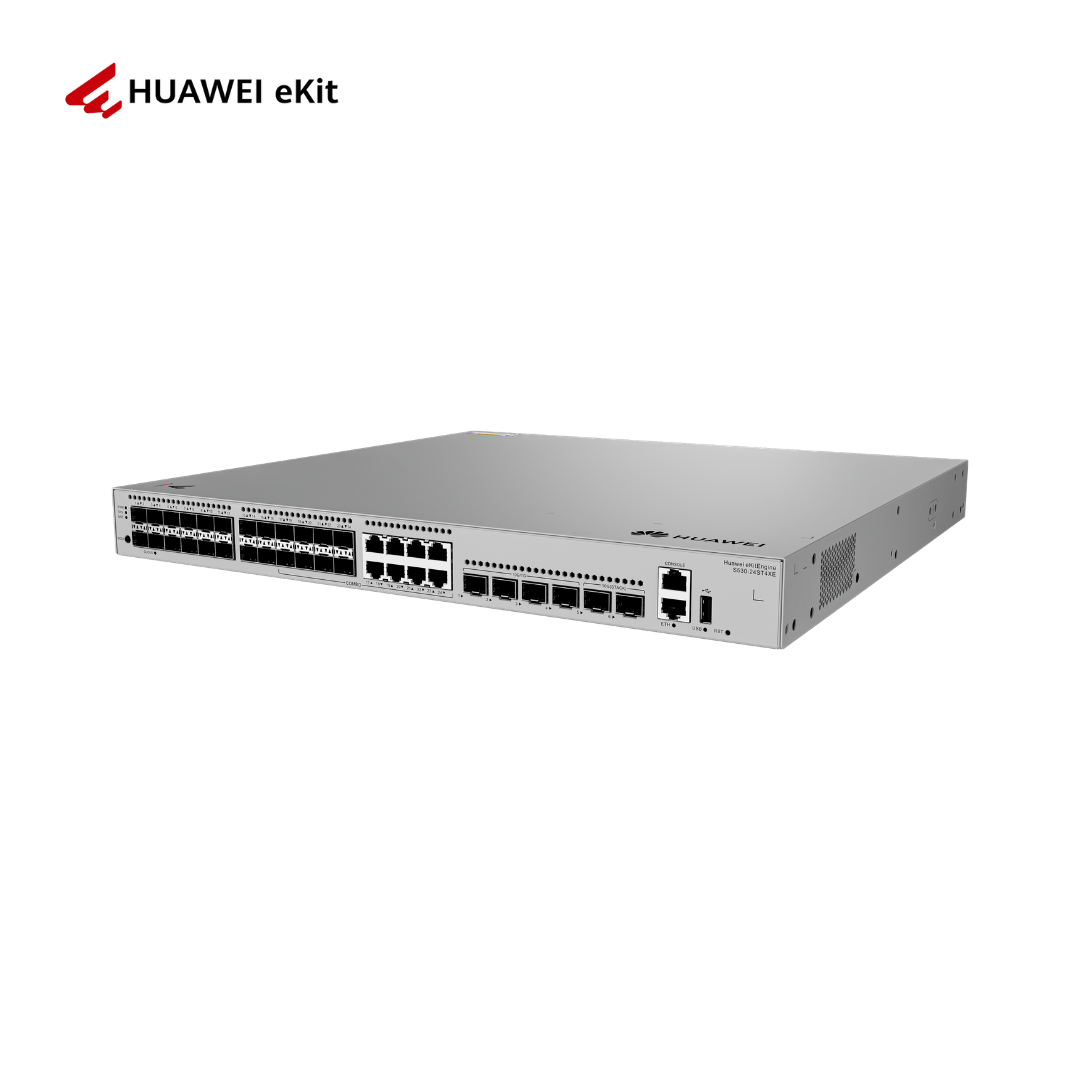
An aggregation switch has to absorb traffic from many access switches at once, so port count and mixed-speed flexibility matter more here than at the edge. The Hi-Capacity Aggregation's 28 10G ports give it enough density to consolidate a sizeable access layer, while its 4 25G ports let a network team route the highest-traffic links, such as an uplink to a core switch or server rack, through faster ports without needing a separate high-speed switch.
- 28x 10G SFP+ and 4x 25G SFP28 ports: Covers most access-layer aggregation needs on 10G while reserving four ports for higher-capacity links where they matter most.
- 760 Gbps switching capacity, 380 Gbps non-blocking throughput: Rated for all 32 ports to be active at once without one link degrading another, relevant when many access switches share this device.
- 565 Mpps forwarding rate: Keeps packet processing ahead of the combined traffic from a large number of aggregated ports.
- Layer 3 routing (inter-VLAN, static routes, DHCP server/relay): Routes between VLANs at the aggregation point instead of sending that traffic to a separate router.
- DC Power Backup input: Accepts a UniFi Smart Power RPS connection, reducing the impact of a primary power failure on a device that many switches depend on.
- 32,000-entry MAC address table: Handles the device count typical of a consolidated network without table limits becoming a concern.
- 1.3" LCM touchscreen: Shows switch state directly on the unit for quick on-site diagnosis.
Where the Pro XG Aggregation is built for networks moving fully to 25G, the Hi-Capacity Aggregation's mixed 10G/25G layout suits a more gradual upgrade path, aggregating an existing 10G access layer while still providing 25G headroom for the links that need it.
The Simplifi Advantage
Getting the 10G/25G port split right for a specific network is easier with input from a distributor who understands the deployment side, not just the price list. Simplifi Networks, an authorized Ubiquiti distributor for Kenya and Uganda, supplies genuine Hi-Capacity Aggregation hardware and can help plan how many 25G ports a given aggregation layer actually needs.