
 2025-08-28
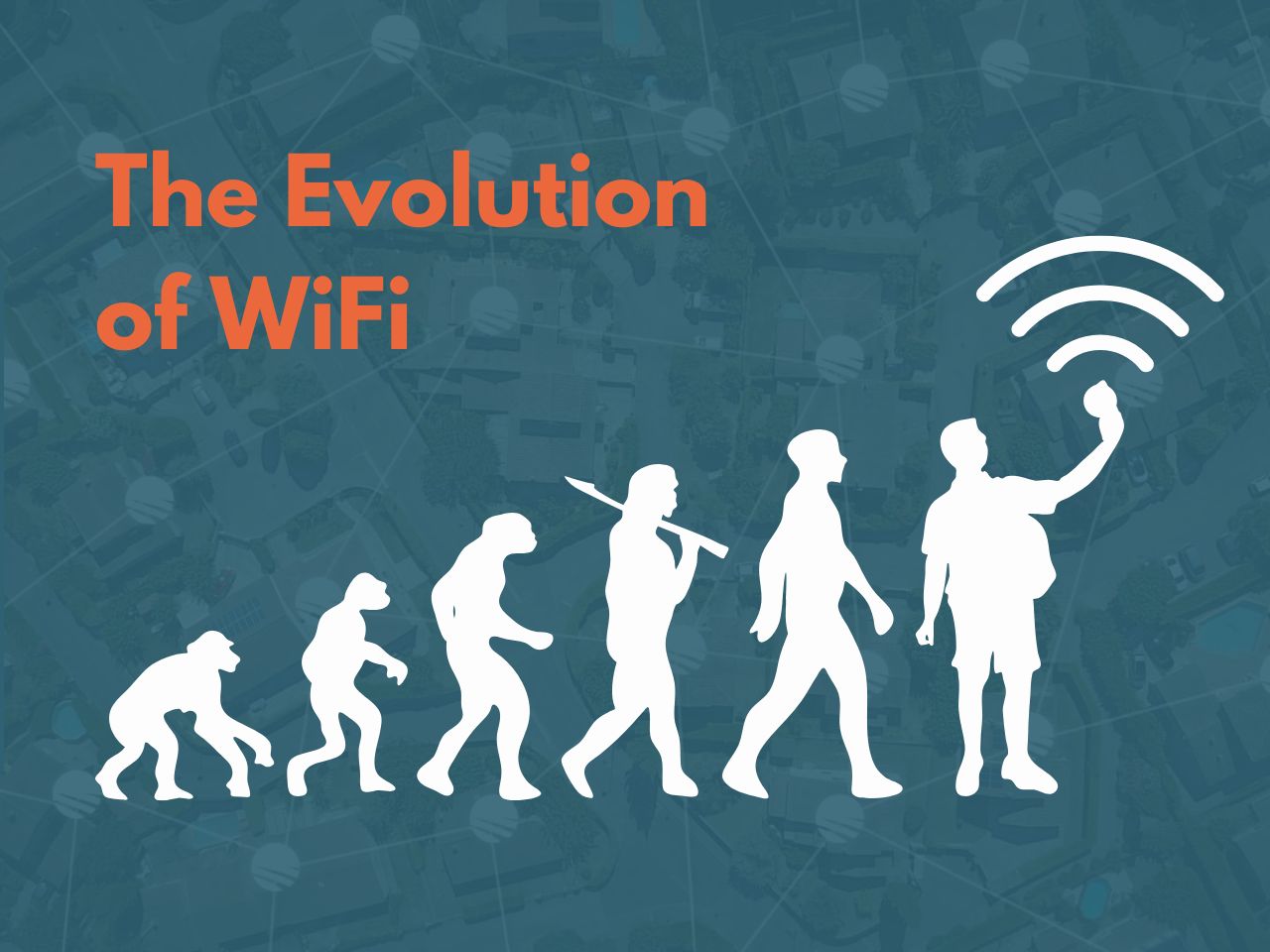
The Evolution of WiFi
Would you believe that the WiFi we rely on today traces its beginnings to a wartime invention developed by a woman who also happened to be a Hollywood actress?
Would you believe that the WiFi we rely on today traces its beginnings to a wartime invention developed by a woman who also happened to be a Hollywood actress?
In 1942, Hedy Lamarr, alongside composer George Antheil, developed a system called "frequency hopping", a way of sending radio signals that kept changing channels to avoid detection or jamming. Though intended to protect torpedoes during World War II, this idea became the basis of what we now use in Bluetooth, GPS, and WiFi technology.
That one invention, born out of a desire to help during war, would eventually shape how the entire world connects wirelessly today.
How WiFi Has Changed Over Time
Before WiFi, internet access meant plugging into physical cables. You had to sit at a desk, near a socket, with a wire running from your computer to the wall. Movement was restricted, and so was convenience.
Then came laptops and the need to be more portable.
But with the introduction of WiFi in 1997 under the name IEEE 802.11, that changed. It allowed computers to connect to the internet without cables, using radio signals, a slow 2 Mbps at first, but it was enough to begin a quiet revolution.
How WiFi Grew, One Generation at a Time
Each WiFi version (or "standard") built on the last, not just improving speed, but adapting to how people lived and worked.
IEEE develops many of these standards many years before implementation. Up until now, the standards are backward compatible so older devices can talk still be used on newer access point,
WiFi 1–3: These early versions were mostly for browsing and checking email. They worked, but only if there weren’t too many people online.
WiFi 4 (2009): This version improved speeds and allowed stronger connections in buildings and homes. It became common in cafes and offices. 2.4 ghz, small channel width
WiFi 5 (2014): As video streaming, cloud storage, and smart devices grew, WiFi 5 provided more stable support, especially for multiple devices at once. This is called AC for many, and added 5ghz freq for more users and larger channel size.
WiFi 6 & 6E (2019–2021): These versions didn’t just get faster. They got smarter. They were built to handle busy spaces like hotels, campuses, and co-working spaces where dozens of devices compete for signal. This is called Wifi6 and mostly standard now, better security, large channel sizes and for wifi 6e introduced 6ghz frequency. Although some countries are pushing back on this frequency.
WiFi 7 (2024): The newest version of WiFi changes the game completely. With speeds up to 46 Gbps, better performance in crowded spaces, and lower lag, it supports advanced tech like AR/VR, remote surgeries, live gaming, and smart buildings. This is the latest in the market, with huge channels better use of the communication protocols, and used for connecting MANY devices as we roll out IOT products.
This is not just about downloading a movie faster. It’s about building networks that can support entire lifestyles and businesses in real-time.
The Things We Often Forget About WiFi
We use WiFi every day, but many people don’t understand what it actually is, or what makes it work well.
Here are a few truths most people miss:
WiFi is not the internet. It’s the method your device uses to connect to the internet. If the WiFi is weak, it doesn’t matter how good your internet plan is. But also, if your internet connection is slow, it will mean bad for wifi users too
Walls, devices, and other signals interfere with WiFi. That’s why some rooms always have “bad signal”, and why adding access points or upgrading your router makes a big difference. Thick walls are not good with wifi, but 2.4ghz is more forgiving than 5 or 6ghz. Wifi is also not good with metal as it reflects the signal, although putting metal under or behind your wifi device can help direct it out.
Too many devices can overload a single router. Especially in offices, a proper setup needs VLANs, multiple access points, or even mesh systems to keep everything running smoothly.
Security matters. As more work is done online, unsecured networks can become easy targets for data breaches.
Why WiFi Still Matters and Always Will
WiFi is no longer a luxury. It’s now part of the infrastructure, just like water or electricity. It keeps hospitals running, schools connected, businesses online, and homes filled with entertainment and communication.
As we move into an era of remote work, smart homes, connected vehicles, and real-time collaboration, strong and reliable wireless networks will only become more important.
The introduction of WiFi 7 is not just a step forward. It's a leap. It allows multiple devices to work together without conflict, it prioritizes urgent data, and it removes the lags that used to hold us back.
WiFi has quietly shaped the modern world, and it's still evolving.
From Hedy Lamarr’s frequency-hopping idea during a world war to today's ultra-fast, intelligent networks, WiFi has come a long way. Understanding that journey helps us appreciate what’s behind the signal bars on our screens, and how essential that connection really is.
Whether at home, in a growing office, or across an entire city, WiFi is the invisible force keeping us connected, past, present, and into the future.
If you want to learn more about how WiFi works, or actually experience what a strong, well-planned connection feels like, we’d love to show you. At Simplifi, we’re not just here to talk tech. We help you understand it, build it, and use it in a way that truly fits your life or business.
Come by our offices in Uganda or Kenya, or visit www.simplifinetworks.com , we’re ready to simplifi everything for you.
Leave a Reply
Your email address will not be published. Required fields are marked *